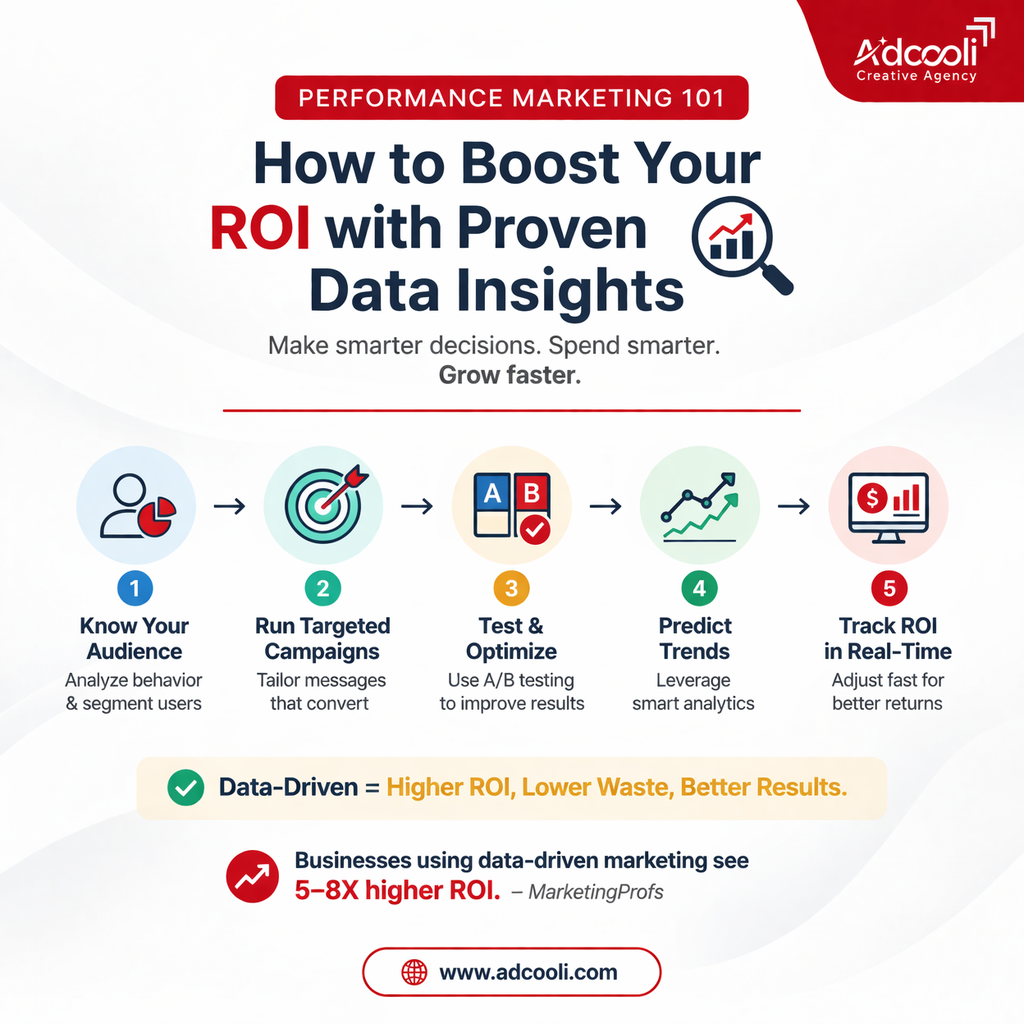
In an era where every marketing dollar matters, performance marketing stands out as one of the most powerful and measurable ways to drive success. By focusing on the direct correlation between spend and results, performance marketing offers a clear view of how your campaigns are performing. But what truly sets successful performance marketers apart is their ability to use data insights to continuously optimize and boost return on investment (ROI).
Here’s how you can harness the power of data insights to elevate your performance marketing game and achieve remarkable results:
1. Leverage Data to Understand Customer Behavior
Understanding your customer is key to creating campaigns that resonate. Using data analytics tools, you can track and analyze customer behavior across various touchpoints—whether it’s a website visit, an email open, or a social media interaction. This allows you to see what’s working, what’s not, and where to make adjustments. Data can uncover patterns in customer preferences, helping you create more personalized, relevant campaigns that have a higher likelihood of converting.
2. Segment Your Audience for Targeted Campaigns
One-size-fits-all marketing is a thing of the past. Thanks to the wealth of data available, you can segment your audience into smaller, more targeted groups based on behavior, demographics, and interests. By using these insights, you can deliver tailored messages that speak directly to each segment’s needs and pain points. This ensures that your marketing efforts are reaching the right people with the right message at the right time, leading to a much higher ROI.
3. Optimize Your Ads with A/B Testing
A/B testing is a cornerstone of performance marketing, and when combined with data insights, it becomes even more powerful. By testing different variations of ads, landing pages, or offers, you can measure which elements drive the best results. Data from these tests provides a clear picture of what resonates with your audience, allowing you to continuously optimize your campaigns. Over time, this leads to better conversion rates and a more efficient ad spend.
4. Use Predictive Analytics to Forecast Trends
Predictive analytics is a game-changer in performance marketing. By analyzing historical data and current trends, predictive models can help you forecast future behaviors and trends. This allows you to make proactive decisions about where to allocate your marketing budget and which channels or audiences to target. For example, if data shows that a particular audience segment is likely to convert during a specific time of year, you can adjust your campaigns to capture those opportunities before they arise.
5. Measure and Adjust in Real-Time
One of the biggest advantages of performance marketing is the ability to track results in real-time. This means you don’t have to wait for weeks or months to see how a campaign is performing. With real-time data, you can instantly assess what’s working and what’s not. If an ad is underperforming, you can tweak it on the fly, reallocate your budget, or adjust targeting to improve results. This agility allows you to maximize your ROI by constantly fine-tuning your campaigns for optimal performance.
Conclusion
Data-driven performance marketing is all about using insights to make smarter, more effective decisions that boost ROI. By understanding your audience, segmenting your campaigns, testing continuously, and utilizing predictive analytics, you can ensure that your marketing efforts are not only efficient but highly impactful. As you continue to measure, analyze, and adjust, your campaigns will become more successful, delivering higher returns on your investment.