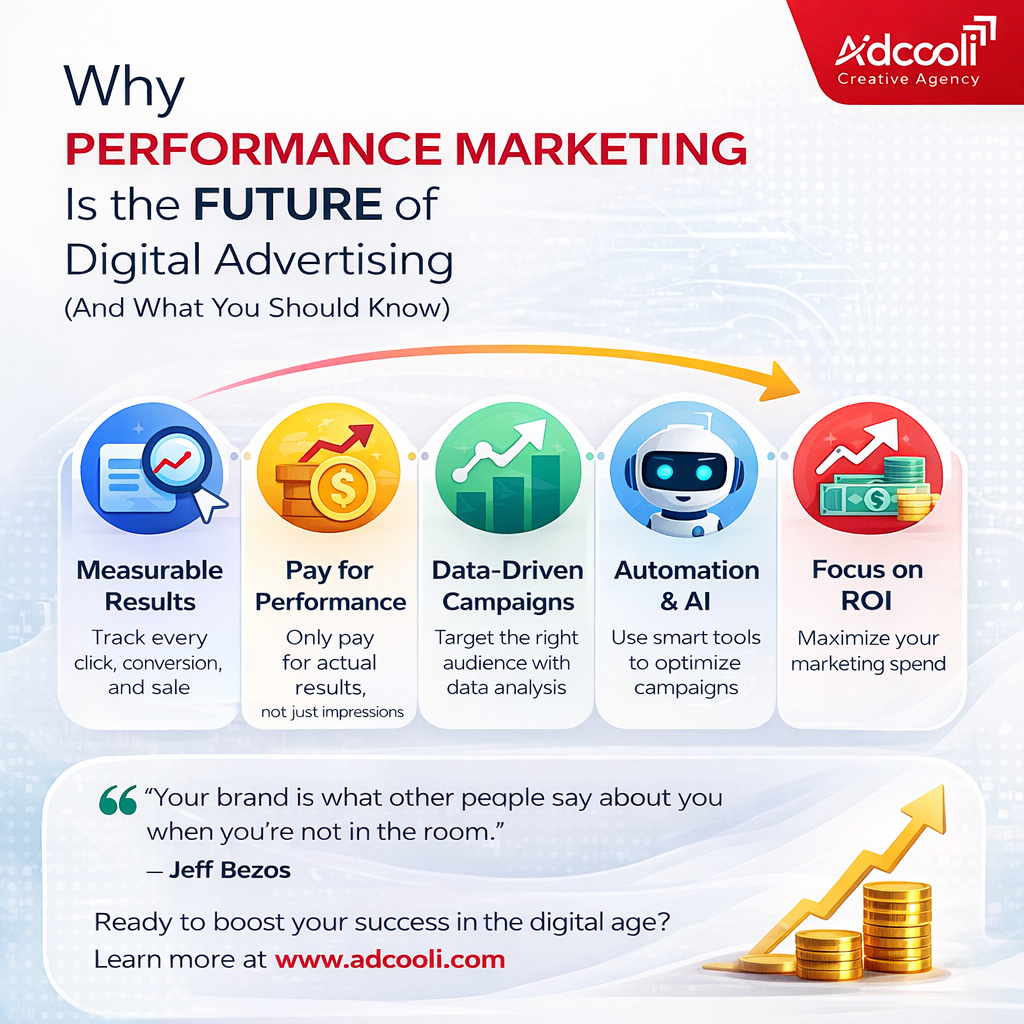
When it comes to digital advertising, one thing is clear: performance marketing is no longer a “nice-to-have”—it’s the future. Gone are the days of traditional advertising where you blindly poured money into campaigns with no clear metrics of success. In the age of data, performance marketing is revolutionizing how brands engage with consumers, and its impact is undeniable. So, what makes performance marketing the future, and why should you care? Let’s break it down. 1. Measurable Results: No More Guessing Remember the good old days of print ads or TV commercials, where you hoped the message got across? With performance marketing, you don’t have to guess. Every click, every view, and every action is measurable. With real-time data at your fingertips, you can see how your campaigns are performing instantly. For example, Facebook and Google Ads offer metrics like CTR (Click-Through Rate) and CPC (Cost Per Click) that let you know exactly where your money is going. No more wondering if your ad spend is working. You’ll know if the traffic is converting into real business outcomes, and you can make adjustments quickly. At Adcooli, we focus on driving these measurable results for you, ensuring that every dollar you spend brings you closer to your goals. 2. Pay for Performance, Not Just Exposure In traditional advertising, you often pay for exposure—whether or not it results in actual sales. Performance marketing flips the script. Here, you only pay for the actual results. Whether that’s clicks, conversions, or sales, you’re paying based on what you actually get. This is why Cost Per Acquisition (CPA) and Return on Ad Spend (ROAS) are critical metrics in performance marketing—they directly tie your spending to revenue. Take Amazon as a prime example: they thrive on performance-based advertising. Their affiliate marketing program pays partners based on the actual sales they generate—proving that performance-based models work, and Adcooli is here to help you implement such strategies effectively. 3. The Rise of Data-Driven Campaigns One of the most exciting aspects of performance marketing is its reliance on data. With digital tools and platforms, marketers can track and analyze consumer behavior, preferences, and purchasing habits. This allows you to run hyper-targeted campaigns, ensuring your message reaches the people most likely to convert. For instance, you can track data from previous interactions to predict future behavior, a concept known as predictive analytics. This approach helps marketers be proactive, not reactive. Imagine knowing exactly when a customer is about to make a purchase—AI and data insights make that possible. Brands like Spotify use data to create personalized playlists for users, and Adcooli helps you leverage this power in your campaigns by using data to target the right audiences at the right time with the right message. 4. A Shift Towards Automation and AI AI isn’t just the future—it’s the now. The marketing world is becoming increasingly automated, thanks to artificial intelligence. AI-powered tools allow for better targeting, more accurate predictions, and smarter ad spend. You no longer have to spend hours tweaking campaigns; AI can do that for you, allowing you to focus on strategy and creativity. For example, Facebook Ads now have AI-based tools that automatically adjust bidding and ad placement based on real-time performance. At Adcooli, we make sure your campaigns are optimized for maximum efficiency, leveraging the latest AI-driven technologies to scale your marketing efforts. 5. Increased Focus on ROI One of the core benefits of performance marketing is its laser focus on ROI (Return on Investment). In an era where every marketing dollar counts, performance marketing ensures that you’re spending wisely. With a clear line between your investment and the returns you’re getting, you can make more informed decisions about where to allocate your budget. With tools like Google Analytics, you can track exactly where your traffic is coming from and what actions those visitors are taking. Adcooli makes sure you’re only investing in channels that provide measurable, profitable returns, ensuring that your marketing efforts contribute to the growth of your business. Conclusion: The Future is Performance-Driven The future of digital advertising is data-driven, measurable, and results-focused. As businesses continue to demand more transparency, performance marketing will only grow in importance. It’s the most effective way to ensure that your advertising dollars are working as hard as possible. If you’re not already leveraging performance marketing, it’s time to jump on board. At Adcooli, we specialize in helping businesses like yours thrive by using performance-based strategies that are backed by real-time data and AI. Remember, in the words of Jeff Bezos, “Your brand is what other people say about you when you’re not in the room.” Performance marketing helps ensure that when people talk about your brand, they’re saying you know how to deliver results. Ready to take your marketing to the next level? Let Adcooli guide the way. Visit us at Adcooli.com to get started on driving success through performance marketing.
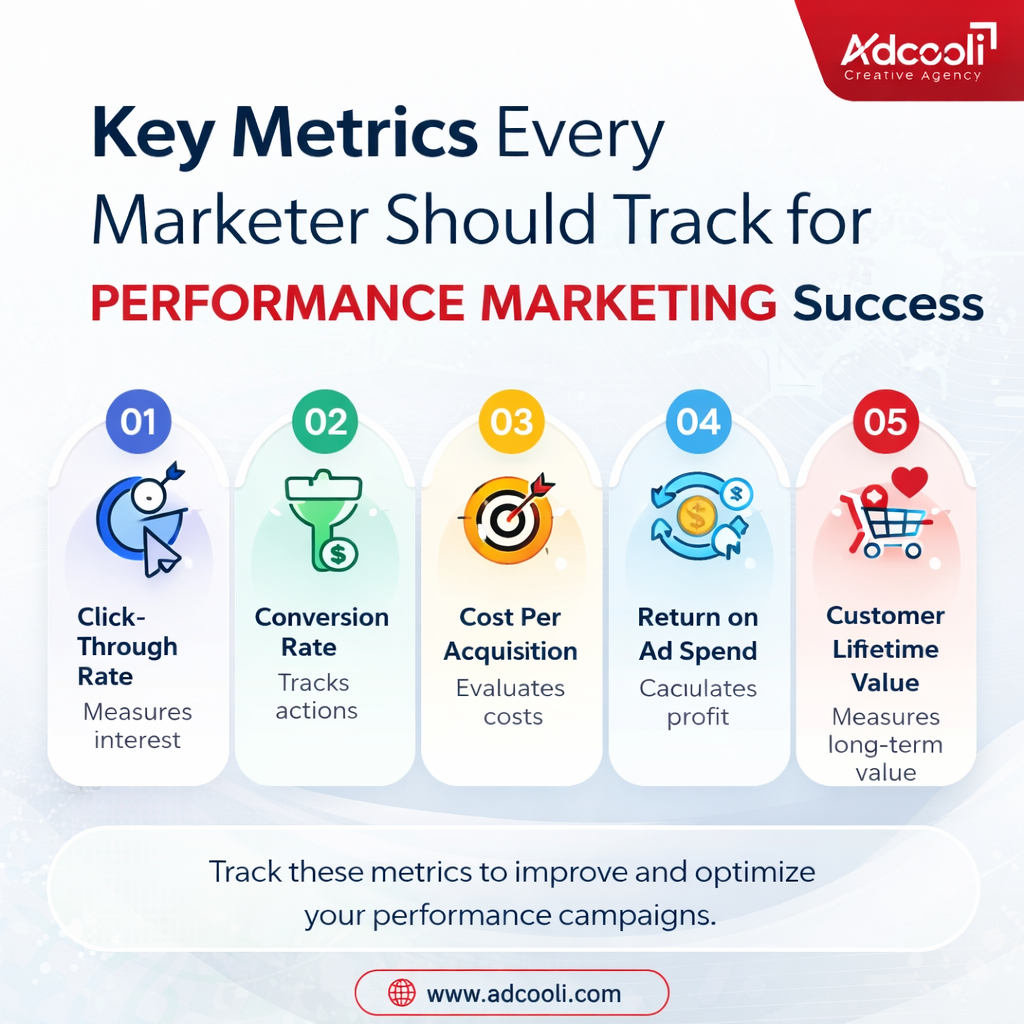
Key Metrics Every Marketer Should Track for Performance Marketing Success
In the world of performance marketing, success isn’t just about running ads and hoping for the best. It’s about understanding what works and what doesn’t, and the best way to do that is by tracking the right metrics. But here’s the catch—tracking everything doesn’t mean you’re optimizing. You need to focus on the key metrics that give you the clearest picture of your campaign’s performance. Think of it like driving a car: if you’re constantly looking at every dial and gauge, you’ll miss the road ahead. But if you’re focused on the important indicators—speed, fuel, and oil levels—you’re more likely to reach your destination without running into any major problems. Let’s dive into the top metrics that matter in performance marketing. 1. Click-Through Rate (CTR) – Are People Interested? CTR is the first step in understanding whether your audience is even interested in what you’re offering. A high CTR means your ad or content is compelling enough to drive action, while a low CTR signals that your message isn’t connecting with the audience. Let’s break it down: At Adcooli, we track this from day one and use it as a benchmark for optimizing ad creative, targeting, and messaging. Pro tip: The average CTR across industries is about 2-3%. If you’re below that, it’s time for a change. 2. Conversion Rate – Turning Interest into Action So, someone clicked on your ad. Great! But did they take action—make a purchase, sign up for your newsletter, or download your app? This is where the conversion rate comes into play. A conversion rate tells you how effective your landing page or offer is at driving real outcomes. Here’s how to calculate it: For example, if 100 people visit your landing page and 3 of them sign up for your offer, your conversion rate is 3%. While conversion rates can vary based on the industry, aiming for at least 2-5% is a solid benchmark. 3. Cost Per Acquisition (CPA) – How Much Does It Cost to Gain a Customer? In performance marketing, every dollar counts. Cost Per Acquisition (CPA) tells you how much you’re spending to acquire a customer. It’s calculated by dividing your total campaign spend by the number of conversions you’ve achieved. If you’re spending more than you’re making, you need to reassess your strategy. At Adcooli, we use this metric to ensure your ad spend is efficiently driving real business results. Keep your CPA in check and always aim for a positive ROI. 4. Return on Ad Spend (ROAS) – How Much Are You Making from Your Ad Spend? When you’re running paid ads, ROAS is your golden ticket. It’s a direct measure of the effectiveness of your advertising spend. If your ROAS is greater than 1, you’re making more money than you’re spending, which is a good thing! If it’s less than 1, you’re losing money. For example, if you spent $1,000 on ads and earned $4,000 in revenue, your ROAS is 4—for every dollar spent, you made four back. A ROAS of 4:1 or higher is generally a good sign, but this will depend on your business model and margins. 5. Customer Lifetime Value (CLV) – What’s the Long-Term Value of a Customer? The true value of a customer goes beyond their first purchase. Customer Lifetime Value (CLV) helps you understand the total revenue you can expect from a single customer throughout their relationship with your brand. Knowing your CLV helps you calculate how much you can afford to spend on customer acquisition while maintaining profitability. If you know a customer is worth $500 over their lifetime, it makes sense to spend a bit more upfront to acquire them—especially in the early stages of your campaign. Conclusion: Focus on What Matters Tracking the right metrics is the key to unlocking performance marketing success. But remember, the numbers alone won’t tell you the full story. You have to dig deeper and continuously tweak your campaigns based on the insights they provide. At Adcooli, we live and breathe data, constantly analyzing performance to help you achieve the best ROI. Keep your eye on these five metrics and optimize relentlessly. Your campaigns will be more effective, your budget will be better allocated, and your marketing strategy will be a well-oiled machine.
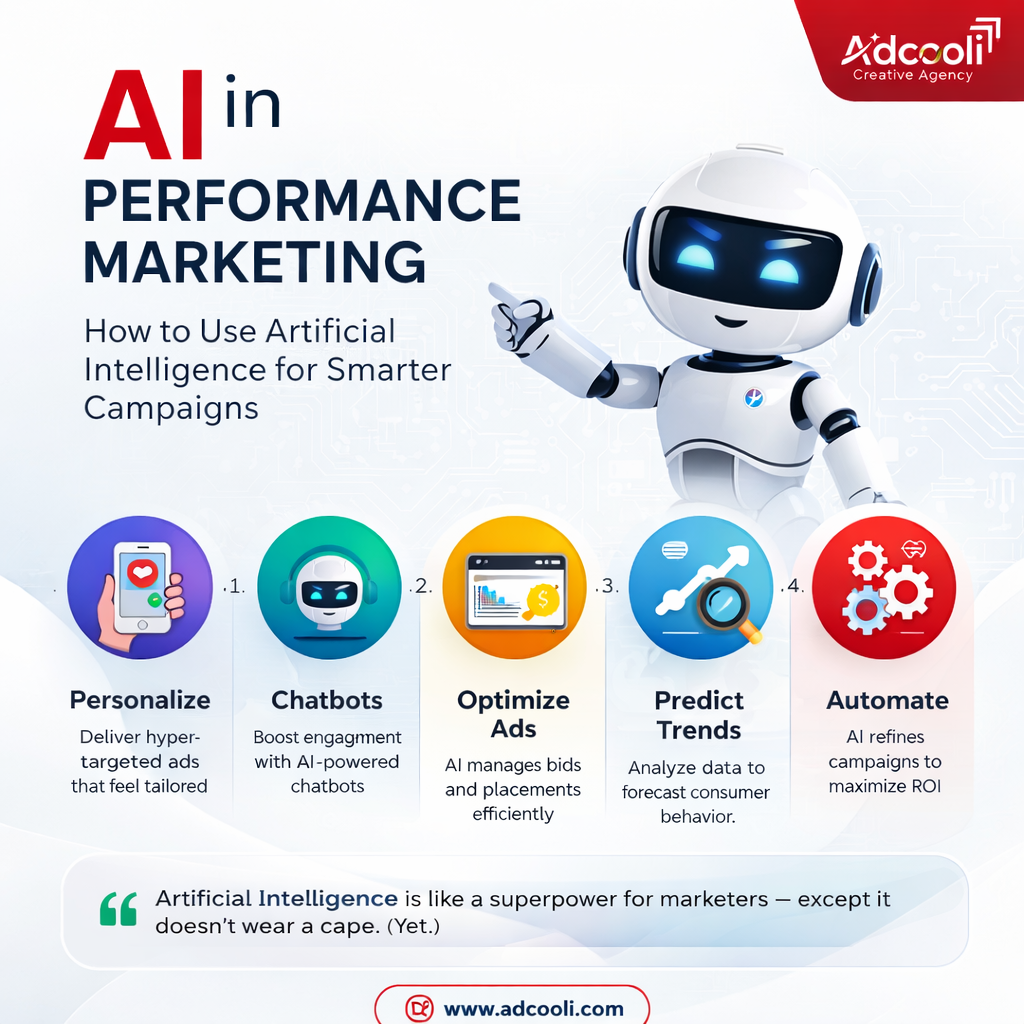
AI in Performance Marketing: How to Use Artificial Intelligence for Smarter Campaigns
In the fast-paced world of marketing, it’s not just about keeping up—it’s about staying ahead. Enter Artificial Intelligence (AI): the game-changer that’s making waves in performance marketing. If you think AI is just for tech giants or sci-fi movies, think again. It’s already here, helping businesses (big and small) optimize their marketing efforts, increase ROI, and connect with customers on a whole new level. As the team at Adcooli often says, “Marketing is all about the right message, to the right person, at the right time.” AI makes that easier—and smarter. 1. AI Makes Data Your Best Friend You’ve probably heard the saying, “Data is the new oil,” and with good reason. In marketing, data fuels every decision. But here’s the catch: sifting through mountains of data manually? Not so fun. AI, on the other hand, thrives in this chaos. By analyzing vast amounts of data at lightning speed, AI can uncover insights and patterns that even the most seasoned marketers might miss. Take Amazon, for example. Their AI-driven recommendation engine analyzes your browsing history and makes product suggestions based on your behavior. It’s what makes their sales soar—according to a report, 35% of Amazon’s revenue comes from product recommendations driven by AI. And guess what? Adcooli can help you do something similar with your digital campaigns, using AI to find patterns in your audience’s behavior and tailor messages that hit the mark. 2. Personalized Marketing? AI’s Got You Covered Personalization is the buzzword in marketing, and AI is the powerhouse behind it. AI takes personalization to a whole new level by continuously learning from customer interactions and predicting what they’ll want next. Instead of generic “Dear Customer” emails, AI helps brands like Netflix and Spotify recommend shows or playlists based on what you’ve already watched or listened to. Want to replicate that level of personalization for your campaigns? Imagine sending a tailored ad to a user just as they’re about to make a purchase decision, or an email offering a discount on something they’ve been eyeing for weeks. At Adcooli, we harness AI to automate this process, ensuring that your audience feels seen and understood—at scale. 3. Chatbots: The Customer Service Revolution We’ve all encountered them: those friendly (yet slightly robotic) chatbots that pop up when we’re browsing a website. While they may seem basic, AI-powered chatbots are becoming increasingly sophisticated. They can answer questions, provide product recommendations, and even assist with troubleshooting—all in real-time. Humorously, I once chatted with a brand’s chatbot and asked, “What’s the weather like?” The bot replied with, “I don’t know, but I can help you buy a new umbrella!” Sure, it’s a bit cheeky, but AI chatbots today are seriously advanced. They’re designed to simulate human-like conversations and improve the customer experience. For performance marketers, they’re a game-changer. Imagine having an AI-powered assistant helping customers 24/7, turning visitors into loyal customers. That’s the magic AI brings to the table. 4. AI-Powered Ad Optimization One of the biggest pain points for marketers is figuring out where to allocate their ad spend. Do you put more money into Facebook ads, Google, or Instagram? The answer used to be a guessing game. But now, AI takes over. AI can analyze which platforms, audiences, and types of ads are driving the most conversions and then adjust your budget accordingly in real-time. If you’re running Facebook and Google ads, AI will make recommendations, shifting your budget to the best-performing channels and ads—maximizing ROI. This level of optimization is impossible for humans to achieve on their own. At Adcooli, we use AI to optimize ad spend and ensure you’re getting the most bang for your buck. 5. Predictive Analytics: The Crystal Ball of Marketing Ah, predictive analytics—the closest thing to a marketing crystal ball. By analyzing past data, AI can predict future trends, customer behaviors, and even potential purchasing patterns. It’s like having a superpower that helps you plan your campaigns ahead of time, rather than reacting to trends as they happen. For example, AI can predict when a customer is likely to churn (unsubscribe, cancel, or leave). This gives you a window of opportunity to intervene with a special offer or personalized content to keep them engaged. Predictive analytics is especially useful in performance marketing, where staying one step ahead of the competition is crucial. Conclusion: AI + Performance Marketing = Success AI in performance marketing isn’t just a trend—it’s a revolution. Whether it’s optimizing your ads, predicting trends, or personalizing customer experiences, AI is the silent powerhouse that drives smarter, more effective marketing. At Adcooli, we help you harness AI to streamline your processes and make your campaigns more impactful. In the words of Albert Einstein (yes, even Einstein had a thing for AI): “The true sign of intelligence is not knowledge but imagination.” So, don’t just use AI to follow trends—use it to break the mold and create smarter, data-driven campaigns that’ll take your marketing game to the next level.
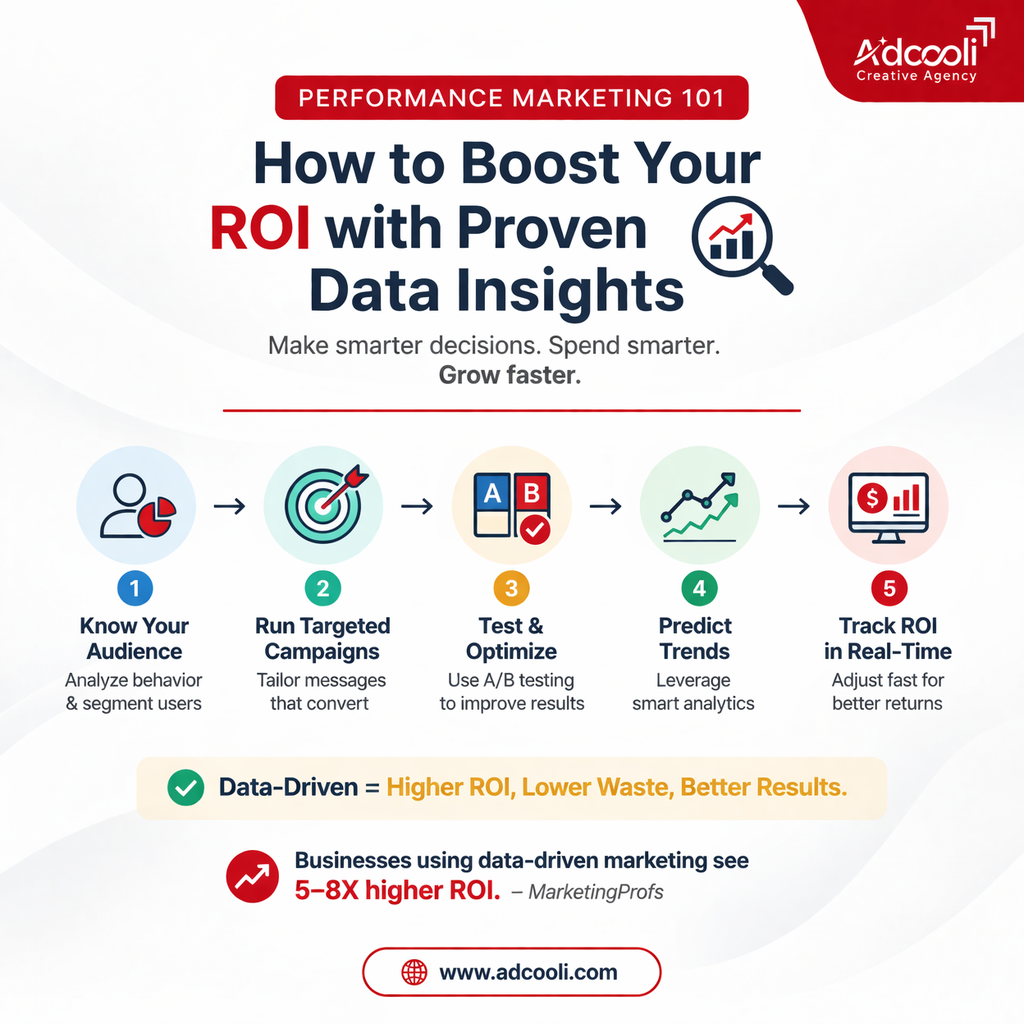
Performance Marketing 101: How to Boost Your ROI with Proven Data Insights
In an era where every marketing dollar matters, performance marketing stands out as one of the most powerful and measurable ways to drive success. By focusing on the direct correlation between spend and results, performance marketing offers a clear view of how your campaigns are performing. But what truly sets successful performance marketers apart is their ability to use data insights to continuously optimize and boost return on investment (ROI). Here’s how you can harness the power of data insights to elevate your performance marketing game and achieve remarkable results: 1. Leverage Data to Understand Customer Behavior Understanding your customer is key to creating campaigns that resonate. Using data analytics tools, you can track and analyze customer behavior across various touchpoints—whether it’s a website visit, an email open, or a social media interaction. This allows you to see what’s working, what’s not, and where to make adjustments. Data can uncover patterns in customer preferences, helping you create more personalized, relevant campaigns that have a higher likelihood of converting. 2. Segment Your Audience for Targeted Campaigns One-size-fits-all marketing is a thing of the past. Thanks to the wealth of data available, you can segment your audience into smaller, more targeted groups based on behavior, demographics, and interests. By using these insights, you can deliver tailored messages that speak directly to each segment’s needs and pain points. This ensures that your marketing efforts are reaching the right people with the right message at the right time, leading to a much higher ROI. 3. Optimize Your Ads with A/B Testing A/B testing is a cornerstone of performance marketing, and when combined with data insights, it becomes even more powerful. By testing different variations of ads, landing pages, or offers, you can measure which elements drive the best results. Data from these tests provides a clear picture of what resonates with your audience, allowing you to continuously optimize your campaigns. Over time, this leads to better conversion rates and a more efficient ad spend. 4. Use Predictive Analytics to Forecast Trends Predictive analytics is a game-changer in performance marketing. By analyzing historical data and current trends, predictive models can help you forecast future behaviors and trends. This allows you to make proactive decisions about where to allocate your marketing budget and which channels or audiences to target. For example, if data shows that a particular audience segment is likely to convert during a specific time of year, you can adjust your campaigns to capture those opportunities before they arise. 5. Measure and Adjust in Real-Time One of the biggest advantages of performance marketing is the ability to track results in real-time. This means you don’t have to wait for weeks or months to see how a campaign is performing. With real-time data, you can instantly assess what’s working and what’s not. If an ad is underperforming, you can tweak it on the fly, reallocate your budget, or adjust targeting to improve results. This agility allows you to maximize your ROI by constantly fine-tuning your campaigns for optimal performance. Conclusion Data-driven performance marketing is all about using insights to make smarter, more effective decisions that boost ROI. By understanding your audience, segmenting your campaigns, testing continuously, and utilizing predictive analytics, you can ensure that your marketing efforts are not only efficient but highly impactful. As you continue to measure, analyze, and adjust, your campaigns will become more successful, delivering higher returns on your investment.
Top 5 Data-Driven Marketing Strategies for 2026: A Performance Marketing Guide
In today’s fast-paced digital world, data-driven marketing has become essential for success. With 2026 just around the corner, marketers who prioritize data will be the ones leading the charge in performance marketing. By using data to drive decisions, you can craft more personalized, efficient, and measurable campaigns that deliver stronger results. Here are the top five data-driven marketing strategies to focus on as we head into 2026: 1. Personalization at Scale Personalization is no longer just a “nice-to-have”—it’s expected. Consumers today demand experiences that speak directly to their needs and preferences. By leveraging customer data—like past purchases, browsing behavior, and demographic insights—you can create hyper-targeted campaigns that resonate with individual users. Advanced analytics tools can help you analyze customer data at scale, allowing you to deliver personalized messaging and offers across multiple channels, from email to social media to websites. 2. Predictive Analytics for Proactive Campaigns Predictive analytics uses historical data to forecast future trends and consumer behavior. This allows you to make smarter decisions in real-time and prepare for future opportunities. For example, by analyzing past campaign performance, you can predict which customers are most likely to convert and when. This insight enables you to tailor your campaigns proactively, ensuring that you’re targeting the right audience at the right time. 3. Cross-Channel Marketing Automation Today’s consumers engage with brands across multiple platforms. Whether it’s through email, social media, mobile apps, or websites, the key to success is delivering a consistent and seamless experience. Data-driven marketing automation helps you connect with customers across different touchpoints while ensuring that your messaging is tailored to their needs. By using customer behavior data, you can set up automated workflows that deliver relevant content and offers in real-time, improving engagement and conversions. 4. Real-Time Analytics for Agile Decision-Making Gone are the days of waiting for weeks or months to see the results of your marketing efforts. Real-time analytics provide instant feedback, allowing you to make data-driven decisions on the fly. This is crucial for fine-tuning your campaigns as they unfold. If something isn’t working, you can pivot quickly, adjust your approach, and reallocate resources for maximum impact. Whether you’re tracking social media engagement, website traffic, or ad performance, real-time data helps you stay agile and responsive. 5. AI and Machine Learning for Smarter Marketing Artificial intelligence (AI) and machine learning (ML) are transforming how we approach marketing. These technologies can analyze vast amounts of data to identify patterns, optimize content, and even automate decision-making. For example, AI-powered tools can help you predict which types of content will resonate best with specific audiences, or automatically adjust bidding strategies in digital ads for optimal performance. By integrating AI and ML into your performance marketing strategies, you’ll be able to improve accuracy, efficiency, and outcomes. Conclusion As we look ahead to 2026, data-driven marketing will continue to dominate. By adopting these strategies and using data to inform every decision, you’ll be able to deliver more personalized, effective, and impactful campaigns. The future of marketing is all about leveraging data to connect with customers in more meaningful ways—and those who embrace this approach will be the ones that thrive.